Why 40km Transmission Still Matters in Modern Networks?
As network traffic continues to grow across enterprise, telecom, and data center environments, the demand for reliable long-distance connectivity has not diminished. While much of the industry focus has shifted toward higher speeds like 100G and 400G, there are still many scenarios where 40G remains a practical and cost-effective solution. In particular, 40km transmission links are commonly required for metro networks, inter-campus connections, and enterprise backbone infrastructures. In these cases, selecting the right optical module becomes critical to ensuring both performance and long-term network stability. Among various options, 40G QSFP+ modules designed for extended reach continue to play a key role in bridging geographically dispersed network segments.
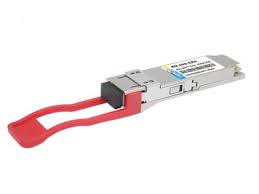
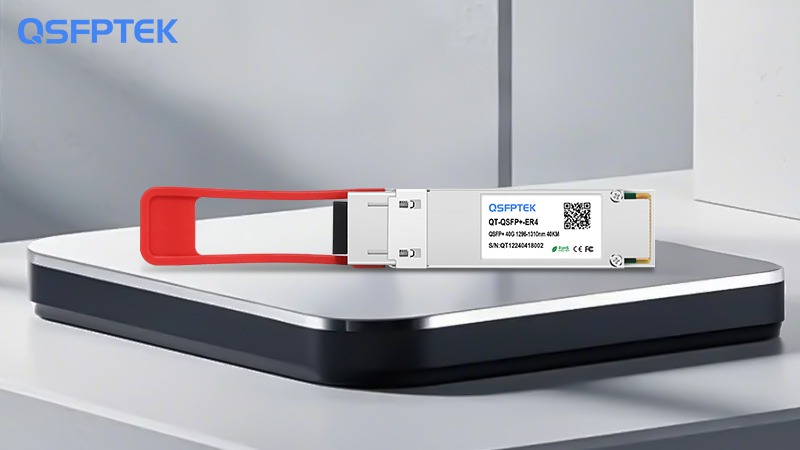
Another important consideration is the balance between upgrading infrastructure and maintaining cost efficiency. Not all networks require an immediate transition to higher-speed architectures, especially when existing systems are still built around 40G. For organizations looking to extend link distances without a complete overhaul, 40G QSFP+ modules provide a practical pathway. This is where the 40GBASE-ER4 QSFP+ 1310nm 40km optical transceiver module comes into focus, offering a solution specifically engineered for long-haul 40G connectivity over single-mode fiber.
What Makes 40G QSFP+ ER4 Suitable for 40km Links?
Long-Reach Capability Based on WDM Technology
The defining feature of a 40G ER4 module is its ability to support transmission distances of up to 40km over single-mode fiber. This is achieved through wavelength division multiplexing technology, where four independent optical signals are transmitted over different wavelengths within the 1310nm window. By combining these signals onto a single fiber pair, the module efficiently delivers 40Gbps data rates while maintaining signal integrity over long distances. Compared to short-reach modules, ER4 is specifically optimized for higher optical output power and enhanced receiver sensitivity, allowing it to overcome attenuation and dispersion challenges associated with extended fiber links.
Strong Optical Budget for Improved Reliability
Another reason ER4 stands out is its relatively high optical budget, which provides greater tolerance for link loss. In real-world deployments, fiber connections are rarely perfect, and factors such as connector insertion loss, patch panel attenuation, and fiber aging can all impact signal quality. The higher optical budget of ER4 modules helps compensate for these variables, ensuring more stable performance over time. This makes it particularly suitable for mission-critical applications where consistent connectivity is essential and link failures can result in significant operational disruptions.
Evaluating the Cost vs Performance Trade-Off
Higher Initial Cost Compared to Short-Reach Modules
One of the main concerns when considering 40G QSFP+ ER4 is cost. Compared to modules like SR4, PSM4, or even LR4, ER4 transceivers are significantly more expensive due to their advanced components and long-distance capabilities. This higher upfront investment can be a barrier, especially for organizations with tight budgets or those operating primarily within short-range environments. From a purely cost perspective, deploying ER4 where shorter-reach modules would suffice is not an efficient use of resources.
Long-Term Value in Reduced Infrastructure Complexity
Despite the higher initial cost, ER4 can deliver long-term value in specific scenarios. For example, instead of deploying multiple intermediate switches or signal regeneration points to extend a shorter-reach link, a single ER4 connection can cover the entire 40km distance. This reduces network complexity, lowers power consumption, and minimizes potential points of failure. Over time, these operational benefits can offset the higher upfront cost, making ER4 a more economical choice in long-distance deployments.
When Is 40G QSFP+ ER4 the Right Choice?
Metro and Inter-Campus Connectivity
ER4 modules are particularly well-suited for metro network applications and inter-campus connections where distances often exceed the capabilities of LR4 or PSM4 solutions. In these environments, the ability to transmit data reliably over tens of kilometers without additional amplification or regeneration equipment is a significant advantage. This makes ER4 an ideal solution for organizations that require stable, high-speed links between geographically separated facilities.
Scenarios with Limited Fiber Resources
Another scenario where ER4 proves valuable is in networks with limited fiber availability. Because ER4 uses wavelength multiplexing over a single pair of fibers, it allows operators to maximize the utilization of existing infrastructure. This is especially important in urban environments or legacy deployments where installing new fiber can be costly or impractical. By leveraging ER4, organizations can extend network reach without expanding their physical cabling footprint.
When ER4 May Not Be the Best Option
Short-Distance Data Center Deployments
In data center environments where link distances are typically within a few hundred meters to a couple of kilometers, ER4 is often unnecessary. Modules such as SR4 or PSM4 can deliver the required performance at a fraction of the cost. Using ER4 in these scenarios would not provide additional benefits and would instead increase overall deployment expenses without improving network efficiency.
Transitioning to Higher-Speed Architectures
Another factor to consider is the long-term evolution of the network. If an organization is planning to upgrade to 100G or higher in the near future, investing in 40G ER4 modules may not be the most strategic decision. In such cases, it may be more practical to allocate resources toward next-generation technologies rather than extending the lifecycle of existing 40G infrastructure.
Final Verdict: Is 40G QSFP+ ER4 Worth It?
Ultimately, whether the 40G QSFP+ ER4 optical transceiver module is worth it for 40km transmission depends on the specific requirements of the network. For long-distance links that demand high reliability, strong optical performance, and minimal infrastructure complexity, ER4 offers clear advantages that justify its cost. It enables organizations to achieve stable 40G connectivity over extended distances without the need for additional equipment, making it a powerful solution in the right context.
However, ER4 is not a one-size-fits-all option. In short-reach deployments or environments preparing for higher-speed upgrades, its benefits may not outweigh its cost. Rather than viewing ER4 as a default choice, it should be considered a specialized tool designed for specific long-distance scenarios. By carefully evaluating network requirements, distance constraints, and future scalability, organizations can determine whether ER4 is a worthwhile investment or whether alternative solutions would be more appropriate.