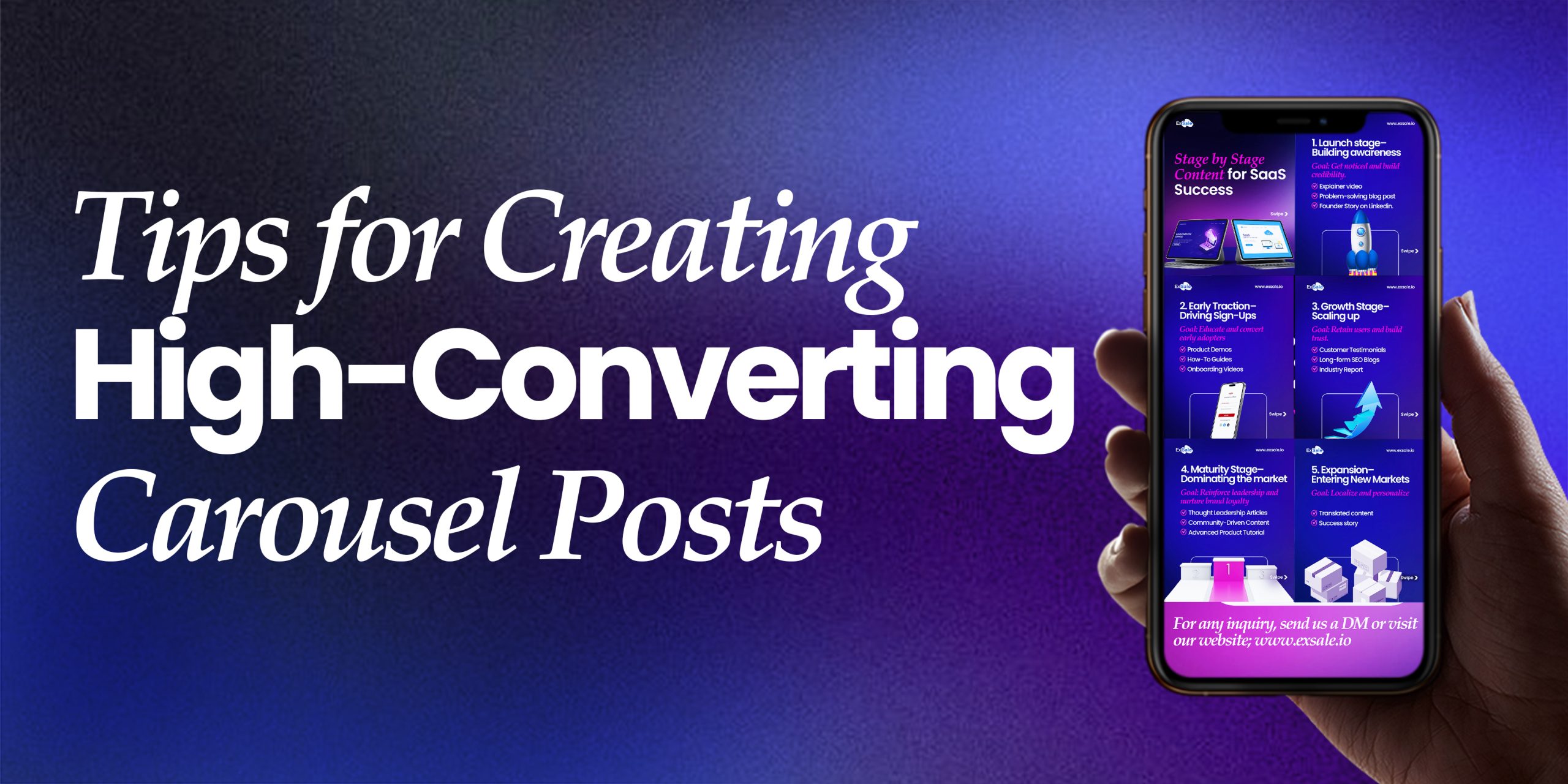
Carousel posts are not only a design trend, but also one of the most effective teaching and conversion tools on social media. When applied wisely, carousels decelerate the scroll, direct learning and transform people out of curiosity to action. Nevertheless, the majority of creators abuse them by filling them with information or using each slide as a post.Good design is not all that is required to make carousels work. You need a clear distribution workflow setup that aligns structure, sequencing, and intent across platforms.This guide outlines the methods of using carousel posts to make an educational post, ensure that the viewer builds trust, and might make a conversion to the point of not saturating the reader.
The reasons why the Carousel Posts are more successful than the one-image content.
Carousel posts lead to interaction.
They:
- Spend more time in content.
- Trigger swipe behavior
- Improve save and share rates
- Enabling guided storytelling.
Swipes are indication of depth of engagement in terms of algorithm. To the user, carousels can be seen as mini guides but not promotional posts.
Teaching vs Telling: the Core Carousel Advantage.
Most posts tell. Carousels teach.
Teaching-focused carousels:
- Decompose complicated concepts into stages.
- Develop knowledge gradually.
- Reduce cognitive overload
This makes them ideal for:
- Frameworks
- Processes
- Tutorials
- Mistake breakdowns
Teaching builds trust. Trust enables conversion.
Slide One A pledge, but no title.
The swiping of the carousel depends on whether you want to swipe or not through your first slide.
Effective first slides:
- Address a clear problem
- Promise a specific outcome
- Use simple, bold language
Examples:
- This is the reason why your content does not convert.
- “Steal this 5-step distribution workflow setup”
Avoid vague titles. Make the value unmistakable.
Organizing Slides to make them easier to read and remember.
The Ideal Slide Flow
- Hook – Why this matters
- Context What is missing or broken.
- Framework – The solution structure.
- Explanation – One point per slide.
- Application – How to use it
- CTA – What to do next
Every slide must be based on a logical continuation rather than dumping a lot of content.
How to Make It Simple and not Shallow.
Density is not required to give depth.
Use:
- Short sentences
- One idea per slide
- Visual spacing
- Supporting examples
A slide should not take over 15 seconds to read, that is too much.
The Missing Conversion Layer Most Carousals.
Solely education does not convert.
High converting carousels are:
- Subtle positioning
- Outcome-focused language
- Clear next steps
You should say:
- Save it up to your next launch.
- Before posting again, use this workflow
- It is a matter of direction and not coercion.
Not just Design but Designing the Carousels to be used in Distribution.
There are beautiful carousels that do not move about, and they are of no use.
Design for:
- Mobile-first viewing
- Readability at a glance
- Platform-safe margins
Keep in mind: the majority of the users will not zoom in.
Carousel Posts and the Distribution Workflow Setup
Carousels are bright when they belong to a system.
A simple distribution workflow setup:
- Carousel is the one that brings out the framework.
- The video is short and expands on a single slide.
- Text post shares an opinion
- Case study proves the result
Both the pieces lend the same message – in different formats.
Carousel Behavior Platform-Specific.
- Strong hooks
- Educational pacing
- Clear saves and shares
- Professional framing
- Fewer slides, more depth
- Emphasis on processes
- Vertical storytelling
- Evergreen tips
- Clear headlines
Same idea. Different execution.
Typical Carousel Curiosity Blunders that Crippled Conversion.
- Too many slides
- Tiny text
- No clear takeaway
- Weak or missing CTA
- Inconsistent messaging
When the users swipe and do not take action, something is absent.
Carousel Effectiveness Measuring.
Track beyond likes.
Look at:
- Saves
- Shares
- Profile visits
- Rate of completion (last slide reach)
High saves mean value. High shares mean clarity. The interest of high profile visits.
Recycling Carousel Content Effectively.
A single powerful carousel may be transformed into:
- A blog outline
- A short video script
- A newsletter section
- A Twitter/X thread
This turns teaching content into a scalable distribution workflow setup.
Final Thought
The reason why Carousel posts are effective is that they put into consideration the way people learn. They slack the consumption, tabulate ideas and direct action all in a swipe. When paired with a clear distribution workflow setup, carousels stop being one-off posts and become repeatable conversion assets. It isn’t about saying more, but teaching better, making sense, providing your audience with a reason to make a recurrence of similar visits – and make the next step.Good design is not all that is required to make carousels work. You need a clear distribution workflow setup that aligns structure, sequencing, and intent across platforms.