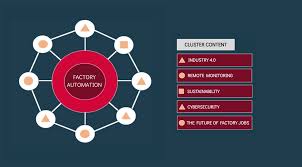
The reason why social media growth fails is not due to the low content quality but rather a poor distribution structure. Algorithms find it difficult to sort disconnected ideas posted by creators on a daily basis, and audiences find them hard to recall. The Topic Cluster strategy solves this by turning random posting into a repeatable content distribution strategy that builds authority, consistency, and long-term reach across social platforms.
The Topic Cluster Strategy (In Simple Terms) What it Means.
- One of the main subjects that the world wants to know about you.
- Several related subtopics in favor of that central idea.
- Relevant content rather than isolated content.
- Distribution to compound, not to reset, distribution.
The Reason Topic Clusters Perform so well on social media.
Algorithm-Level Benefits
- Platforms know your niche quicker.
- Your content will be displayed to the same interest group many times over.
- There is better interaction since relevancy remains the same.
Audience-Level Benefits
- The followers do not forget the reason why they follow you.
- You do not look like a generalist, but a specialist.
- Notions of trust are developed due to repetition of a theme.
Cluster Topics vs Pillar Topic.
Pillar Topic
- Your main theme
- Wide enough to carry a number of posts.
- Outcome-driven
- Example Pillar:
- Social media lead generation.
Cluster Topics
- Profile optimization
- Content hooks
- DM funnels
- Case studies
- Mistakes & myths
- Conversion psychology
- The pillars are supported by each cluster at a different angle.
The way to construct a topic cluster (step-by-step).
Step 1: Choose One Core Outcome
- What do your listeners or readers eventually desire?
- Leads, sales, authority, engagement or growth.
- Do not be too general such as social media tips.
Step 2: Create 5-7 Content Buckets
These are categories that you are repeating:
- How-to education
- Frameworks & systems
- Common mistakes
- Case studies / examples
- Opinions & myths
- Tools & processes
This makes content not be stagnant.
Step 3: Mind Map Posts (Do Not Literally).
- One post sets up the next
- One idea deepens another
- Each of the posts is a subset of a bigger conversation.
Examples:
- Problem-solution-breakdown-example.
- Error – correction – paradigm – case study.
The most suitable content formats in terms of the topic cluster are the best.
- Discovery: short-form videos.
- Carousels for education
- Opinions and positioning text posts.
- Case studies for trust
- Picture saves and share structures.
Same topic. Different formats. Better distribution.
Using Topic Clusters as a Content Distribution Strategy
Platform-Specific Distribution
- Instagram: Reels + carousels
- LinkedIn: Text posts + document carousals.
- X (Twitter): Threads
- YouTube: Shorts + long-form
- One cluster – several platforms – uniform messaging.
Smarter Repurposing
- A single concept can be turned into a number of assets.
- Repurposing is not a recycled feel.
- The same signal of power is reiterated in each post.
Automated Audience Segmentation.
- Entry-level cluster posts.
- Mid-level strategy failures.
- High-tech buyer understanding.
All the people remain within the same content ecosystem.
Common Mistakes to Avoid
- Coming up with an excess number of pillar topics simultaneously.
- Publishing unguided educational materials.
- Changing the subject according to the trends.
- Differentiation in publication within the cluster.
- Honing clusters as one time campaigns.
The Strengthening Brand Authority as Topic Clusters.
- Recreating the same theme makes the audience identify you with that theme.
- Consistency and not complexity leads to building authority.
- Too much depth would be demonstrated by topic clusters.
- Perceived expertise is developed as a result of various posts on the same topic.
- People trust those creators who reason why and not the what.
- Well-known subjects enhance saving, sharing, and revisions.
- With time, followers cease to read individual posts and follow the journey.
- This will make your content distribution strategy deliberate and professional.
The Topic Clusters as a Way to Move Audiences toward Conversion.
- Cluster posts on education are appealing to cold audiences.
- Framework and how-to articles introduce them to it.
- Cases and examples create credibility.
- Decision-making is induced by opinion and myth-busting posts.
- The clusters reinforce various levels of buyer preparedness.
- There is no hard selling at each step.
- Transactions occur since the audience is already aware of your worth.
- Topic clusters lead the followers silently on awareness to action.
Conclusion
The Topic Cluster strategy turns social media posting into a structured content distribution strategy instead of a daily guessing game. Dividing the issues into one central subject and releasing the ideas in the order, the creators teach the algorithms, as well as viewers, to perceive them as experts. In a busy social area, brevity is noisier than length and subject groups provide just that.